

CASE STUDY
Custom Cabinetry
PROJECT INTRODUCTION
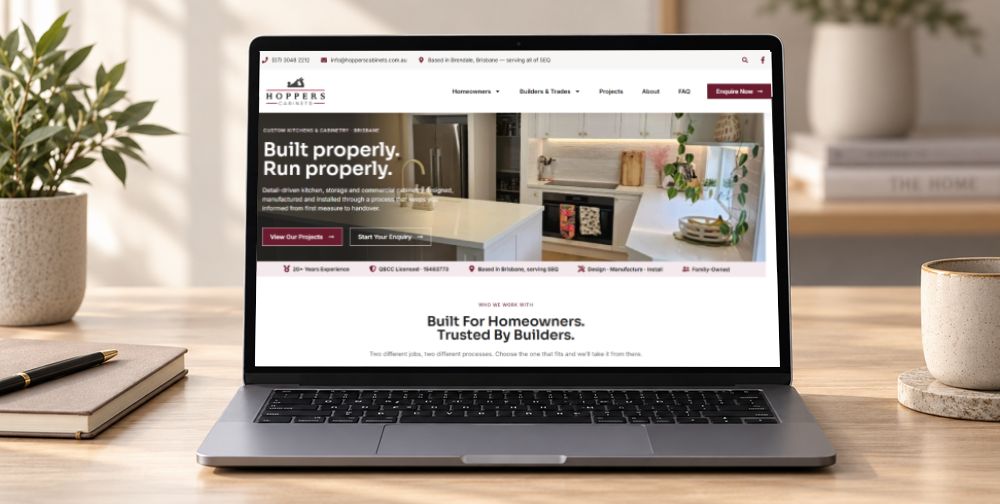
Hoppers Cabinets had built a genuine reputation through the quality of its cabinetry, clear communication and a structured way of running projects. The website hadn’t kept pace. It existed across several pages, Products, Testimonials, Our Story and Contact, but there wasn’t enough detail on any of them to properly show that standard, and every visitor, whether a homeowner planning a kitchen or a builder chasing a quote, was funnelled through the same generic enquiry form.
The project rebuilt the site on WordPress with a clearer structure, stronger messaging and a proper system for enquiries and future projects, giving Hoppers Cabinets a website that actually reflects how the business operates.
PROJECT INTRODUCTION
Hoppers Cabinets had built a genuine reputation through the quality of its cabinetry, clear communication and a structured way of running projects. The website hadn’t kept pace. It existed across several pages, Products, Testimonials, Our Story and Contact, but there wasn’t enough detail on any of them to properly show that standard, and every visitor, whether a homeowner planning a kitchen or a builder chasing a quote, was funnelled through the same generic enquiry form.
The project rebuilt the site on WordPress with a clearer structure, stronger messaging and a proper system for enquiries and future projects, giving Hoppers Cabinets a website that actually reflects how the business operates.
For Hoppers Cabinets, the gap wasn’t a lack of good work behind the business, it was that the site wasn’t set up to communicate it. Completed projects weren’t consistently showcased, the enquiry process didn’t separate a homeowner’s renovation from a builder’s plan set, and there was no simple way to add new work over time without rebuilding pages from scratch.
That gap meant potential clients couldn’t fully judge the quality on offer, and the site wasn’t functioning as a proper enquiry system for either audience it needed to serve.
A homeowner planning a kitchen renovation and a builder quoting from a set of plans are looking for completely different things from the same website.
The rebuild split the site into two clear paths from the homepage. Homeowners get a process built around design, selections and staying informed from first measure to handover. Builders and trades get a path built around plan based quoting, confirmed check measures and a schedule they can rely on. Each side leads to its own enquiry form, so the questions asked upfront actually match the kind of job being quoted.
Cut to Size sits outside that split, available to anyone who already knows what they want and simply needs it manufactured to their drawings.
The old contact form asked every visitor the same set of questions regardless of what they needed, which made for a clumsy first impression and, more importantly, weaker information to work from.
The rebuilt enquiry system asks the right questions upfront for each audience, gathering enough detail to actually assess a job before the first conversation happens. That means less time spent on enquiries that were never going to be a fit, and a better first exchange with the ones that are.
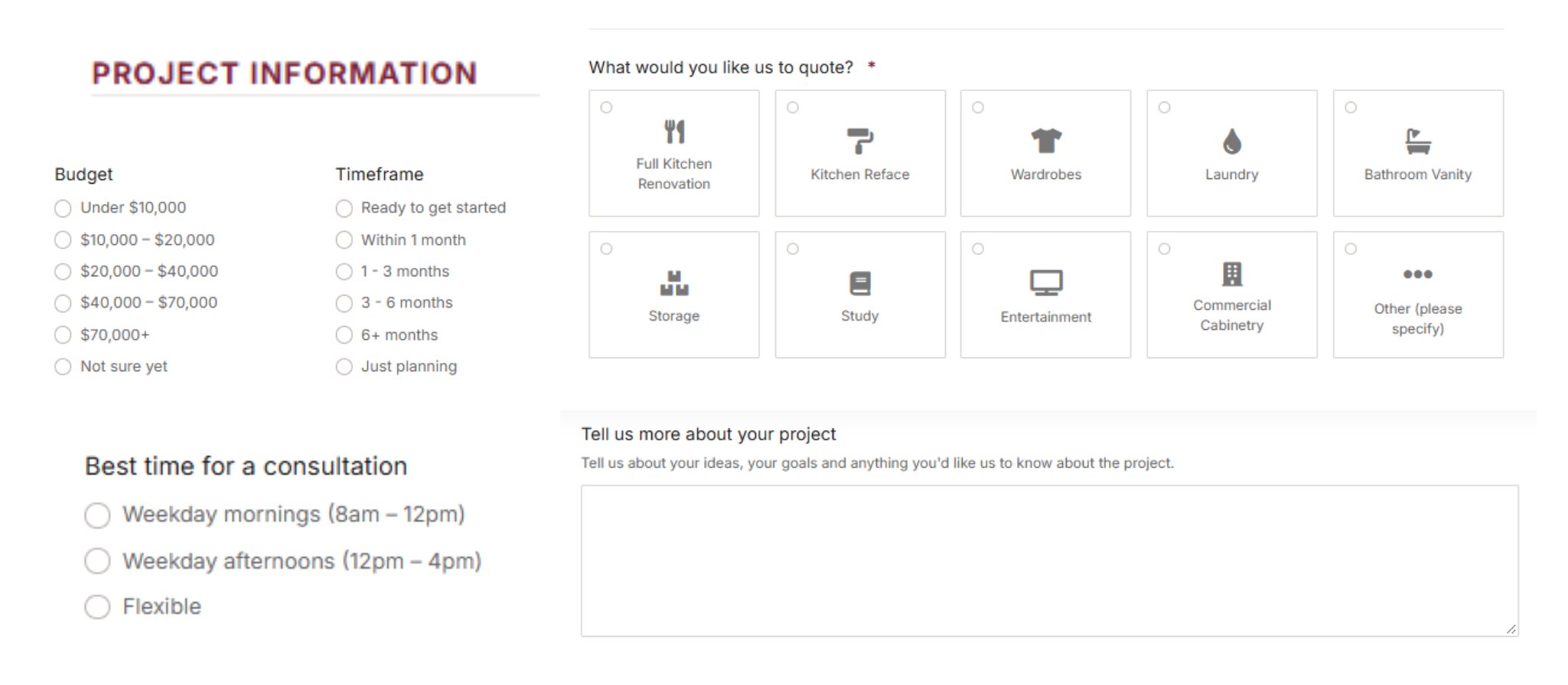
Image shows some sections of the rebuilt enquiry system.
Plenty of cabinetmakers can build good cabinetry. Fewer run the job like a professional operation from first enquiry to hand over.
Hoppers Cabinets is family owned and run by Rob and Alyssa Hopper, built on more than twenty years of hands on trade experience. Rob brings the craftsmanship, Alyssa runs the communication and scheduling that make the experience easier to deal with. That combination, real trade experience paired with an operation that answers the phone and holds its dates, became the core of the site’s messaging rather than a line buried on an About page.
Clients get a business that treats a renovation or a build like a job worth managing properly, not just a job worth building well.
Transparent pricing, milestone payments and clear timelines were built into the messaging as standing commitments, not just a features list, since they’re the things that actually put a client at ease partway through a project.
Rather than adding a new page by hand for every completed job, the site now runs on a structured project library. Each new project goes in using a consistent format, tagged by type and location, so the portfolio grows properly over time instead of turning into a mismatched set of one off pages.
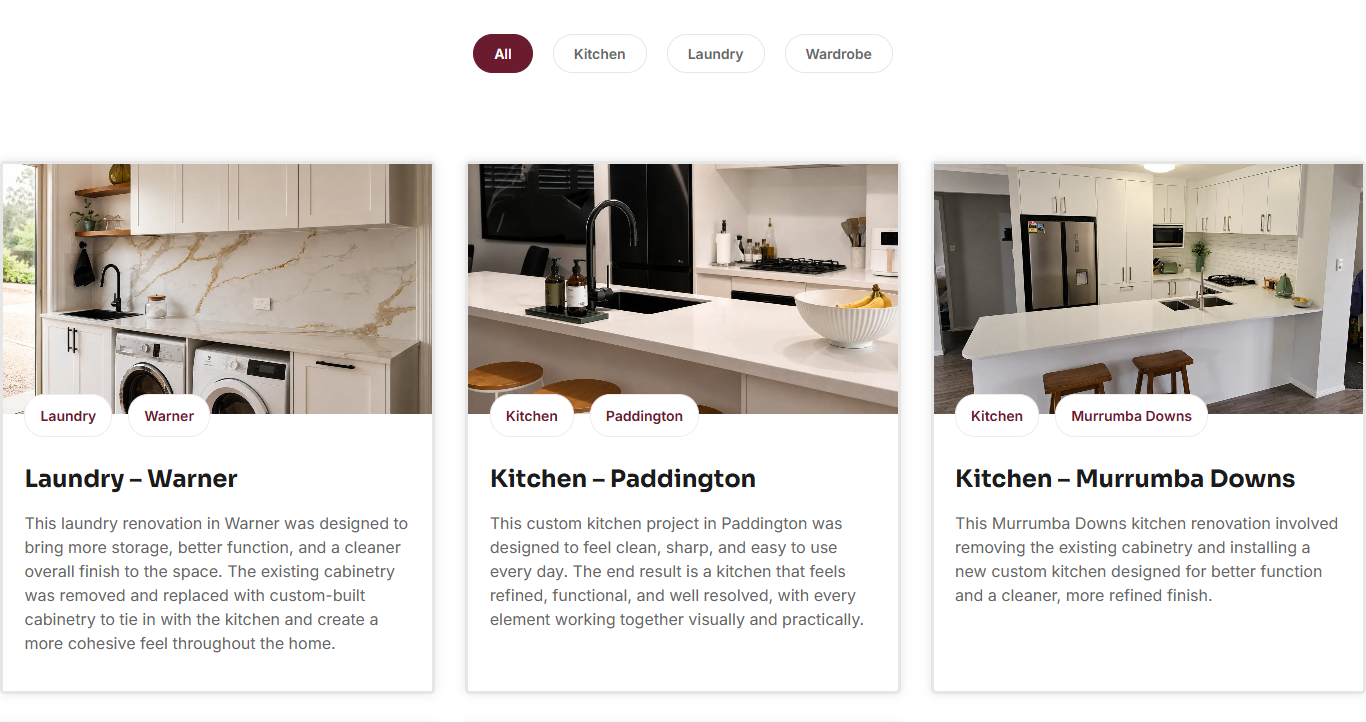
That structure does double duty. It gives future clients a genuine body of work to judge the business against, and it gives Google and AI search tools consistent, well tagged content to draw from when matching a search to what Hoppers Cabinets actually does.
The site was built with a foundational SEO structure from the ground up, covering clear headings, service specific content and location context for Brisbane and South East Queensland.
The goal wasn’t to stuff pages with keywords. It was to make sure the site clearly answers the questions a prospective client or an AI search tool would actually ask: what does this business do, who is it for, and is it worth contacting.
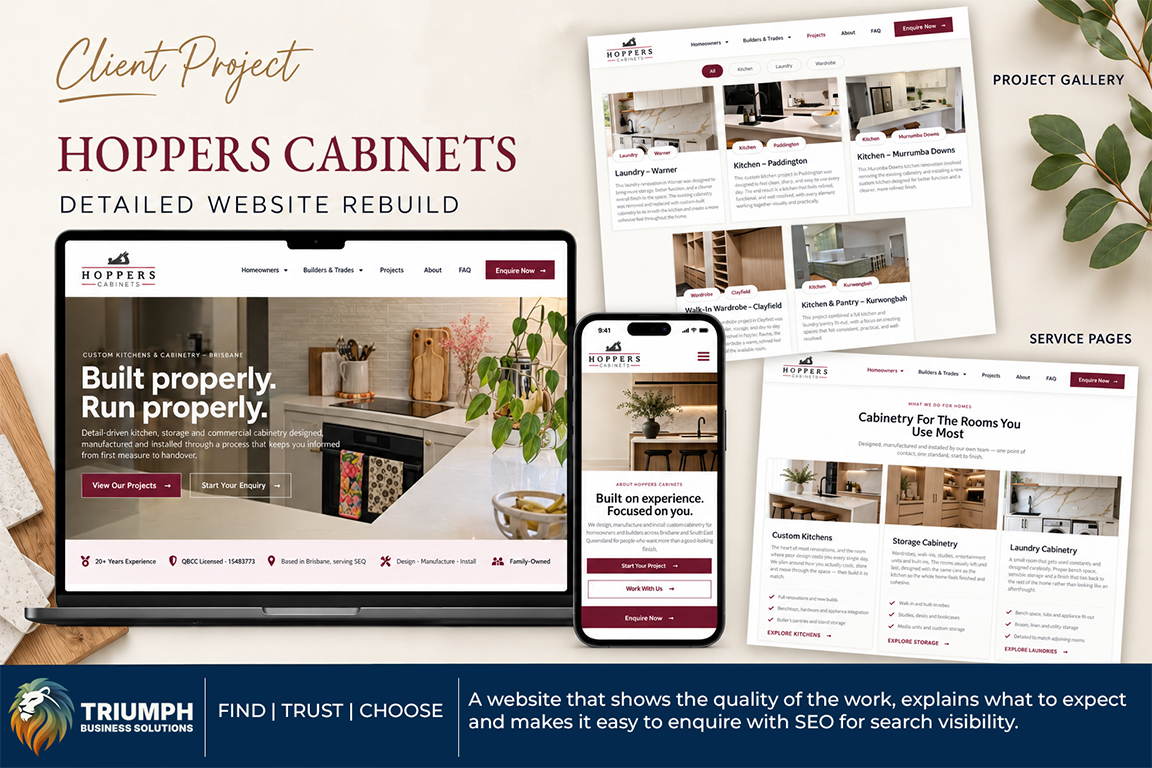
The finished Hoppers Cabinets website brings the same structure and standards the business already runs on into the part of the experience most clients see first.
It doesn’t rely on flashy design to make the case. It relies on a clear path for the right kind of client, a genuine record of completed work, and a business that’s easy to get hold of and easy to trust before the first site visit ever happens.
That’s what turns a website from a digital brochure into part of how the business actually wins the right jobs.
YOUR TURN
Hoppers Cabinets’ site was built to earn trust and qualify the right enquiries before the first conversation. I can do the same for your business.
Hoppers Cabinets is a family owned custom cabinetry business based in Brendale, Queensland, run by Rob and Alyssa Hopper and serving homeowners and builders across Brisbane and South East Queensland.
I rebuilt the Hoppers Cabinets website on WordPress, including refined messaging, separate pathways for homeowners and builders, a structured project library, a proper enquiry system and foundational SEO.
To match the website to the standard of the actual work, showcase completed projects properly, and give homeowners and builders a path suited to what they each need.
Homeowners and builders were given separate journeys with their own enquiry forms, so each one gathers the right information upfront rather than asking every visitor the same generic questions.
Yes. The site was built with foundational SEO from the start, including clear headings, service specific content and location context, to help both traditional and AI powered search understand and surface the business.